

Introduction
As summer approaches, thousands of hikers across British Columbia start heading to the trails. And for many this means knee pain. This is one of the most common issues people experience, especially during the first few hikes of the season.
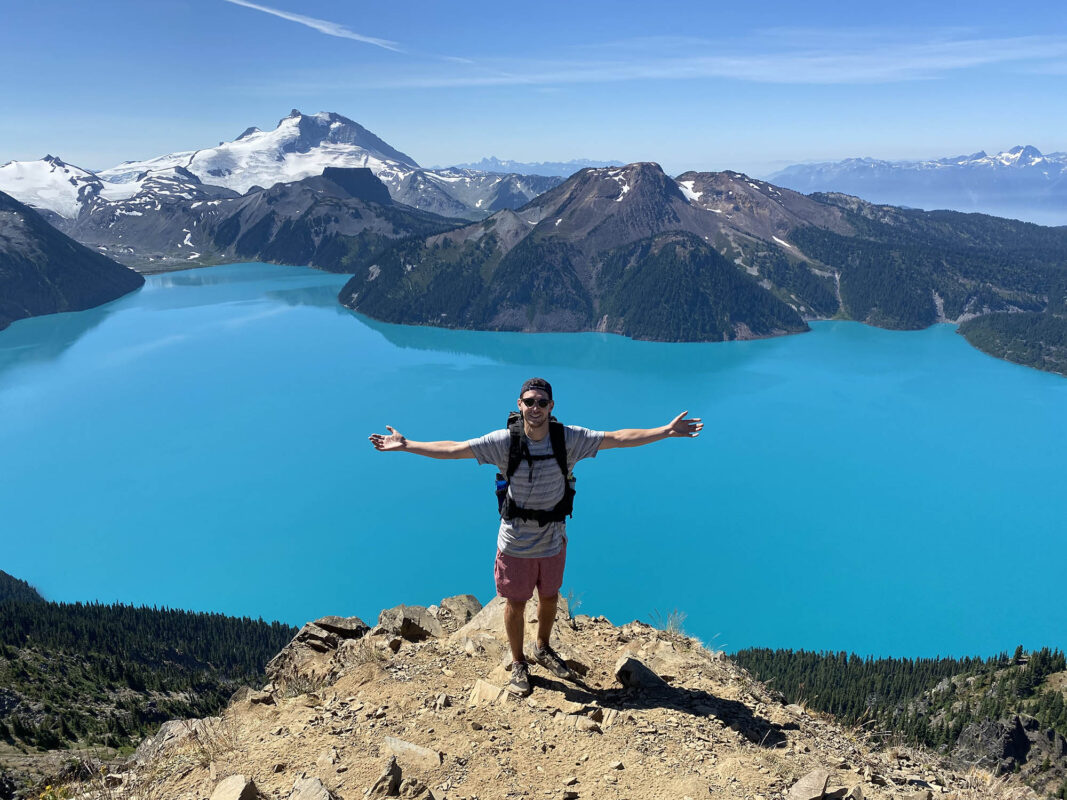
Whether you’re hiking to Garibaldi Lake, Panorama Ridge, Joffre Lakes, or exploring the North Shore mountains, many hikers notice that their legs feel strong on the way up but their knees begin to ache on the way down.
If you’ve experienced pain at the front of the knee during a long descent, you’re not alone.
As both a chiropractor and an avid hiker who has completed many of these trails myself, I’ve experienced firsthand how demanding long descents can be on the knees. At Optimal Performance Clinic, our sports rehab and chiropractic team regularly works with hikers, backpackers, and outdoor athletes dealing with knee pain that develops during long days on the trail. Combining clinical experience with time spent in the mountains gives us a practical understanding of the challenges hikers face.
Why Hiking Often Causes Knee Pain
One of the most common patterns we see is pain developing at the front of the knee, particularly during downhill hiking.
Interestingly, most hikers feel the physical challenge of a climb in their muscles. Your lungs work hard, your heart rate rises, and your legs burn during steep ascents.
However, the descent is often where the knees begin to complain.
There are several things that can contribute to this.
Your Muscles Are Already Fatigued
By the time you begin descending, your legs have already spent hours climbing.
Even if your cardiovascular fitness feels good, the muscles responsible for controlling your movement may be significantly more fatigued than they were at the start of the day.
As fatigue accumulates, the body’s ability to absorb and produce force efficiently can decrease, which can increase stress on the knee.
Downhill Hiking Places High Loads Through The Knee
When walking downhill, the quadriceps must work hard to control your body weight as you lower yourself from step to step.
This type of muscle action, known as eccentric loading, places substantial demand on the muscles and tissues around the knee.
The steeper the trail, the larger the backpack, and the longer the descent, the greater these demands become.
Anyone who has hiked down from Panorama Ridge knows that the descent can sometimes feel harder on the knees than the climb itself.
You May Simply Be Under-trained For The Demands Of The Hike
Many hikers spend the winter skiing, training indoors, or simply spending less time on the trails.
When hiking season returns, it’s common to jump straight into ambitious objectives before rebuilding hiking-specific conditioning.
Often, knee pain is less about damage and more about the body being asked to tolerate more load than it has recently prepared for.
Changes In Movement Can Contribute
As the day progresses and fatigue builds, movement patterns can begin to change.
Some hikers notice their feet turning outward, their stride becoming shorter, or certain areas becoming noticeably tighter.
When carrying a heavy backpack, the hips and gluteal muscles are required to generate and control significant force over many hours.
While these changes do not necessarily cause knee pain, they may contribute to altered loading patterns that increase stress on sensitive tissues.
This is particularly common during backpacking trips where hikers are carrying heavier loads over multiple days.
Strategies That May Help On The Trail
Start With A Good Warm-Up
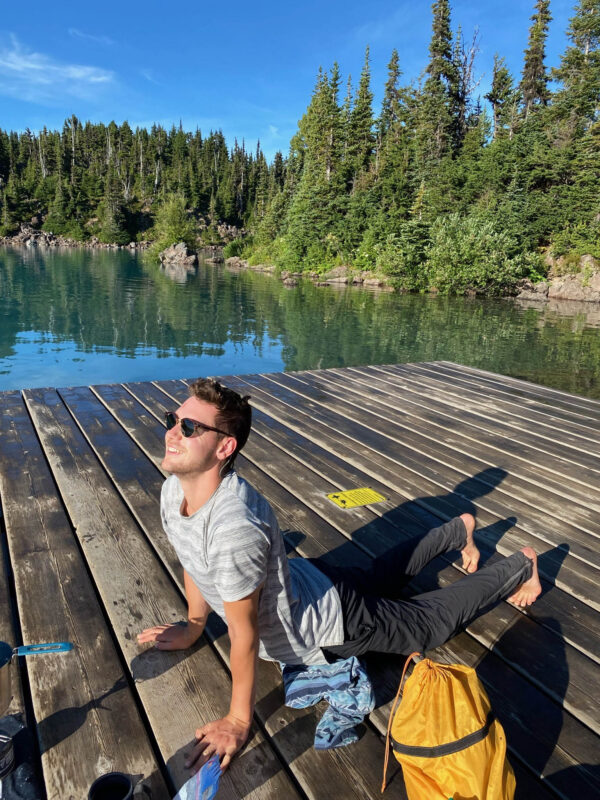 Many hikers spend considerable time preparing their gear but very little time preparing their bodies.
Before heading onto the trail, it’s generally more beneficial to spend a few minutes performing dynamic movements that gradually prepare the muscles and joints for hiking. Some of my favourites include:
- Walking lunges
- Leg swings
- Body weight squats
- Hip circles
These movements increase blood flow, raise body temperature, and help prepare your body for the demands of climbing and descending.
If you tend to feel particularly stiff before or after hiking, adding a few static stretches can also improve comfort. Some of my favourites include:
- Pigeon stretch
- Figure-four stretch
- Calf stretch
- Quad stretch
- Hamstring stretch
While static stretching is unlikely to prevent knee pain on its own, many hikers find it helps reduce feelings of stiffness and improves comfort before or after long days in the mountains.
Pay Attention To Hip Mobility
Many hikers find that their hips become increasingly stiff during long days on the trail.
Personally, I find that spending a few minutes addressing hip mobility before and after hiking can make a noticeable difference in overall comfort.
Movements such as the figure-four stretch or pigeon stretch may help reduce feelings of stiffness around the hips and improve overall comfort during long hiking days.
Gradually Build Hiking Volume
One of the most effective strategies for reducing hiking-related knee pain is gradually increasing hiking exposure before tackling bigger objectives.
If your first hike of the season is a 30-kilometre day with 1,500 metres of elevation gain, your body may not be adequately prepared for that level of demand.
Consistent exposure to shorter hikes often goes much further than occasional heroic efforts.
Strength Training For Hiking
If you want your knees to tolerate long descents better, strength training can be extremely valuable.
Many of the demands seen during downhill hiking involve the quadriceps controlling your body weight through large ranges of motion. Strengthening these muscles can improve your ability to tolerate long days on the trail.
Some of my favourite exercises for hikers include:
- Step-ups
- Step-downs
- Walking lunges
- Leg extensions
- Squats
These exercises help develop lower-body strength and improve your ability to tolerate the loading demands commonly encountered during hiking and backpacking.
For hikers preparing for bigger objectives, strength training is often one of the most overlooked pieces of injury prevention.
Consider Using Trekking Poles
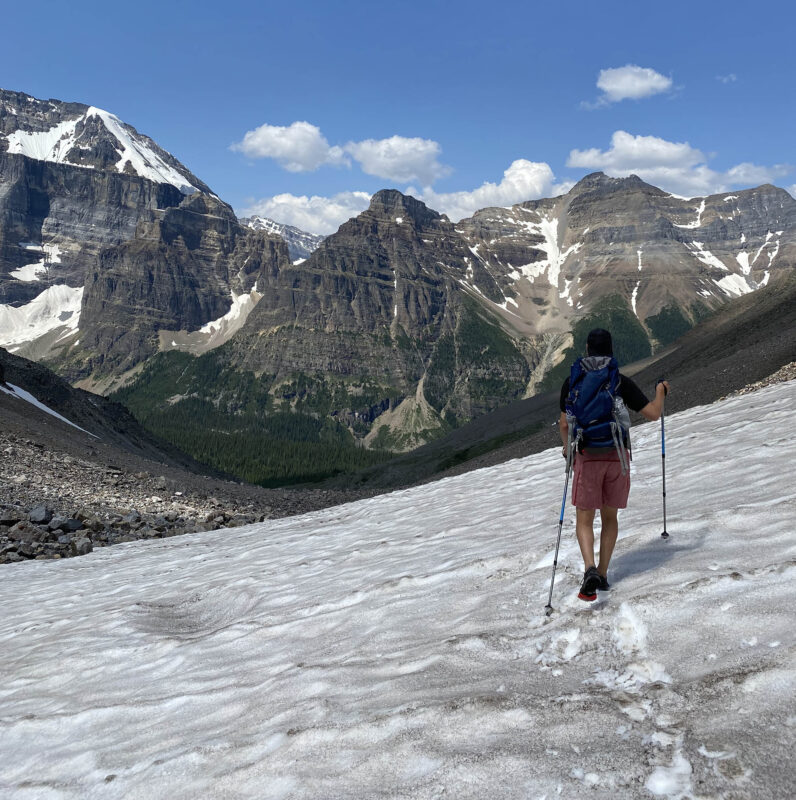
If you’re planning longer hikes or carrying a heavy backpack, trekking poles can make a noticeable difference, especially during long descents.
Rather than relying entirely on your legs to absorb each step downhill, trekking poles allow you to share some of that workload with your upper body. This can reduce the amount of force your knees need to manage on steep or prolonged descents while also improving balance and stability on uneven terrain.
For many hikers, poles are the difference between finishing a hike with tired legs versus sore knees.
If you’re new to using trekking poles, spend some time practicing before a longer hike. Keeping the poles slightly in front of you during descents and using them to help control your speed is generally more effective than simply carrying them for balance.
Recovery Matters
For backpackers and multi-day hikers, recovery between hiking days becomes especially important.
Simple strategies such as adequate food intake, hydration, sleep, and managing overall daily mileage can help improve recovery.
Many hikers also find that cooling off in a cold alpine lake after a long day provides temporary symptom relief and helps them feel more refreshed for the following day.
Personally, if I’m on a multi-day backpacking trip and have access to a cold lake, I’ll often spend five to ten minutes in the water at the end of the day. While this isn’t a magic fix, many hikers find it helps reduce soreness and improve comfort heading into the next day.
When Should You Be Concerned?
The type of knee pain discussed in this article is typically gradual in onset.
Many hikers notice mild discomfort early in the day that slowly increases as mileage accumulates.
This is different from a sudden twisting injury, fall, or traumatic event.
Consider seeking assessment if:
- Pain persists after the hike
- Symptoms continue to worsen over multiple outings
- Swelling develops
- The knee feels unstable
- ain begins limiting your ability to enjoy hiking
How We Approach Hiking-Related Knee Pain
At Optimal Performance Clinic, our sports rehab teams in Vancouver and Burnaby work with hikers, backpackers, trail runners, climbers, and outdoor athletes throughout the Lower Mainland.
One thing we see every day is that two people can hike the exact same trail, carrying the same backpack, at the same pace, and have completely different experiences. One finishes feeling great, while the other develops significant knee pain. That’s because hiking-related pain is rarely caused by a single factor.
Rather than taking a one-size-fits-all approach, our assessment is designed to identify the specific factors contributing to your symptoms. Depending on the individual, these may include strength, mobility, training volume, hiking exposure, movement patterns, recovery strategies, previous injuries, or how your body tolerates load.
Treatment may include:
- Manual therapy
- Mobility work
- Strengthening exercises
- Load management strategies
- Hiking-specific rehabilitation
- Return-to-hiking planning
The goal isn’t simply to reduce pain, it’s to understand why it’s occurring and build an individualized plan that helps you continue exploring the mountains with confidence.
Final Thoughts
Knee pain while hiking is extremely common, particularly early in the hiking season or during long descents.
In many cases, it is not a sign of serious injury but rather an indication that the demands of the hike exceeded what the body was prepared to tolerate.
By gradually building hiking fitness, improving strength and mobility, and managing recovery appropriately, many hikers can significantly reduce the likelihood of knee pain limiting their adventures.
If knee pain is preventing you from enjoying the trails, our sports chiropractic and sports rehab team in Vancouver can help identify the factors contributing to your symptoms and create an individualized treatment and rehabilitation plan so you can get back to exploring the mountains with confidence.
See you in the mountains,