

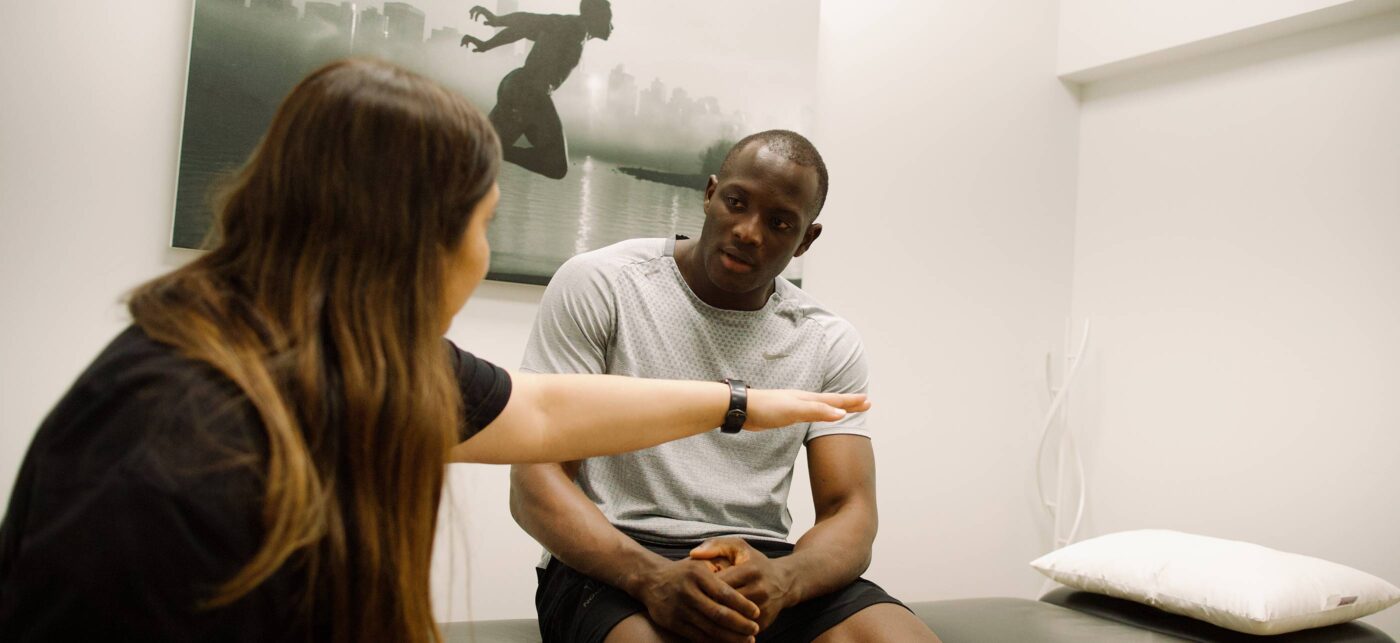
It feels better. You go back to running, lifting, skiing or your sport.
Then it starts hurting again.
You treat it. It settles down. You go back.
And there it is again.
Sound familiar?
At some point, it’s worth asking:
Why does this keep coming back?
Did you actually injure it?
An acute injury usually has a clear event.
You’re running to catch the bus, feel a sharp pain and tear your hamstring. You roll your ankle. You fall skiing and injure your shoulder.
Something happened, and naturally, much of the initial assessment and treatment focuses on the injured area.
But many problems don’t start that way.
Your hip starts hurting when you run. There was no fall. No twist. No moment when you injured it.
It just started hurting.
That’s when simply treating the painful area may not be enough.
Why is that area struggling?
Your body has to handle the demands you place on it.
Running, lifting, work and sport all create load. Problems can develop when those demands exceed what an area is currently prepared to tolerate.
So yes, we’ll assess your hip.
But we’ll also want to know:
Has your training changed? Do you have the strength and capacity for what you’re asking your body to do? Are your foot, ankle, knee or trunk contributing to the task in a way that’s relevant? Has a previous injury changed what you can tolerate?
We’re not looking for something wrong everywhere.
We’re looking for what actually matters.
Otherwise, it’s easy to chase symptoms
Treating the painful area may make it feel better — and symptom relief can absolutely be valuable.
But if every return to activity leads right back to the same problem, we need to ask why.
Pain → treatment → relief → activity → pain.
At Optimal Performance Clinic, our approach has been shaped by decades of treating active people and working in high-performance sport.
We don’t just want to know where it hurts.
We want to understand the diagnosis, what may be contributing to the problem, what your body can currently handle and what you’re asking it to handle.
Because your hip, knee, shoulder or back doesn’t function in isolation.
And good assessment isn’t about finding more things wrong with you.
It’s about knowing what matters — and what doesn’t.
If you’ve been stuck treating the same problem over and over, maybe it’s time to look at the bigger picture.
Book an assessment with our team.